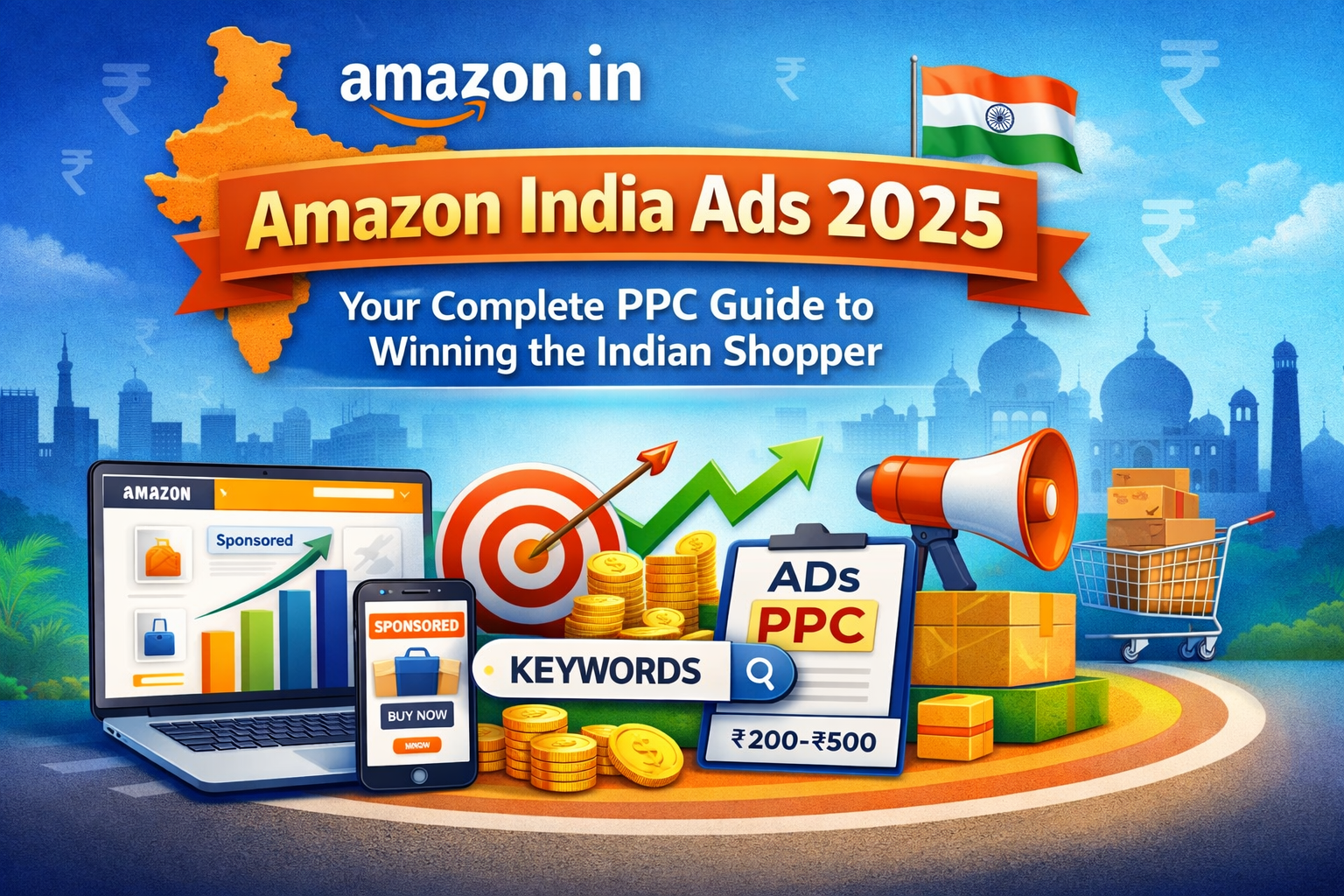
Gone are the days when listing your product on Amazon India was enough. In 2025, the digital bazaar is a roaring, competitive arena. With millions of sellers and an ever-evolving algorithm, your product can easily become a needle in a haystack. This is where Amazon Advertising isn’t just a tool—it’s your megaphone, your billboard, and your savvy salesperson all rolled into one.
If you’re feeling overwhelmed by SP, SB, SD, and rumoured new updates, take a deep breath. This guide is your strategic blueprint. We’ll break down the 2025 landscape of Amazon India PPC, not with jargon, but with actionable insights, real-world examples, and a clear path to turning ad spend into profitable sales.
Why Amazon Ads in India Are Non-Negotiable in 2025
First, let’s set the stage. The Indian e-commerce shopper in 2025 is discerning, value-conscious, and omnichannel. They might discover a product on Instagram, research it on YouTube, but the final “purchase decision” heavily relies on Amazon’s platform—its reviews, its pricing, and its credibility. Your ads place you directly in that decision-making journey.
Amazon’s advertising suite is your direct line to this audience. It’s not just about visibility; it’s about high-intent visibility. When someone searches for “wireless earphones under 2000,” they’re not just browsing; they’re ready to buy. Your ad can be the first thing they see.
The Core Trinity: SP, SB, SD Demystified (With an Indian Twist)
Think of these as your primary weapons, each with a unique superpower.
1. Sponsored Products (SP): Your Ever-Reliable Workhorse
What it is: These are the classic, keyword-targeted ads that appear within search results and on product detail pages. They look organic (marked “Sponsored”) and are perfect for capturing ready-to-buy customers.
Indian Market Strategy for 2025:
- Hyper-Localized Keywords: Move beyond direct translations. Target Hindi, Hinglish, and regional language search terms. Think “juta chappal,” “kitchen ka saman,” or “best phone camera under 15000.” Use Amazon’s search term report religiously to find these gems.
- The Value-First Approach: In a price-sensitive market, your ad copy (via your title and imagery) must scream value. Highlight “BOGO,” “Extra 10% Off with SBI Card,” or “Longest Battery Backup” directly in your main image or title.
- Example: You sell stainless steel lunch boxes.
- Keyword: You target “tiffin box steel,” “lunch box for office,” and “bacho ka tiffin box.”
- Ad Placement: Your product appears as the first or second result when a parent searches for these terms, drastically increasing the chance of a click.
2. Sponsored Brands (SB): Your Brand’s Mega-Storefront
What it is: These are banner ads that feature your brand logo, a custom headline, and a carousel of your products. They appear at the top of search results. This is your brand-building and storytelling tool.
Indian Market Strategy for 2025:
- From Product to Trust: Use SB ads to build narrative. Instead of just pushing a product, your headline can say “Eco-Friendly Home Essentials” or “Authentic Ayurvedic Personal Care.”
- Leverage Video Creatively: SB Video ads are massive. For the Indian audience, create short (15-30 sec), snappy videos in a relatable setting. Show the product in use in a typical Indian home, with clear text overlays explaining benefits (since many watch on mute).
- Example: You are an Indian D2C brand selling plant-based snacks.
- Headline: “Crave Guilt-Free? 100% Natural Protein Snacks.”
- Products: Showcase your peanut masala, peri-peri soya chips, and millet cookies in the carousel.
- Impact: You’re not just selling a bag of chips; you’re selling a healthy, trendy lifestyle, attracting customers to your entire brand portfolio.
3. Sponsored Display (SD): Your Intelligent Retargeting Net
What it is: These ads follow potential customers both on and off Amazon. They use Amazon’s audience data to retarget people who viewed your product but didn’t buy, or to target new customers based on interests and demographics.
Indian Market Strategy for 2025:
- Win Back the “Window Shoppers”: India has a high cart abandonment rate. Use SD ads to remind users of the product they viewed, perhaps with a small discount message, across websites and apps they visit.
- Broad-Reach Awareness: Use the “Audience” targeting to reach millions based on lifestyle interests (e.g., “Fitness Enthusiasts,” “New Parents”). This is great for new product launches in a crowded category like skincare or home appliances.
- Example: A customer views your mixer-grinder but leaves.
- Your SD Ad: An ad for that exact mixer-grinder, showcasing its 3-year warranty, appears later while they’re reading news on a site like India Today. This gentle nudge can bring them back to complete the purchase.
The 2025 Playbook: Key Updates & Strategic Shifts
Amazon’s ad platform is dynamic. Here’s what you must integrate into your 2025 strategy:
- AI-Optimization is King, But Your Input is Queen: Amazon’s algorithms are smarter than ever. Tools like “Optimize for Page Views” or “New-to-Brand” bidding are powerful. However, the 2025 winner will use AI alongside deep human insight. Regularly analyze search term reports, weed out irrelevant clicks (like branded terms of competitors you can’t compete with), and create tightly themed ad groups. Let AI handle the bidding, but you steer the targeting strategy.
- The Rise of Amazon Posts & Interactive Formats: While not pure PPC, Amazon Posts (like an Instagram feed for your products) influence the shopping journey and are free. In 2025, expect more interactive ad formats integrated with SP/SB. Prepare by building a library of high-quality, lifestyle-oriented images and short videos.
- Measurement Gets Smarter: Amazon is providing clearer insights into Total Return on Ad Spend (RoAS) and New-to-Brand Customer metrics. Don’t just focus on ACoS (Advertising Cost of Sale) for a single product. Look at the lifetime value of a customer acquired through ads. Did your SB ad bring in new customers who later bought other products from your store? That’s a major win.
- Hyper-Personalization & Seasonality: The Indian calendar is packed with festivals. Your 2025 campaigns must be built around Amazon Great Indian Festival, Diwali, Navratri, Back-to-School, and Summer Sales. Create specific campaigns for these events with themed ad copy and visuals weeks in advance.
Crafting Your 2025 Campaign: A Step-by-Step Walkthrough
Let’s stitch this all together with a hypothetical example: “DesiKhet,” a brand selling organic desi ghee (clarified butter).
1: Foundation & Goals
- Goal: Increase sales by 40% during the Diwali season (prime gifting time) and build brand recognition.
- Product: Premium Organic A2 Desi Ghee (500ml Jar).
2: Campaign Structure
- Sponsored Products (For Direct Sales):
- Campaign 1 (High-Intent): Target exact match keywords like “organic a2 ghee,” “pure desi ghee for diwali gift.” Use aggressive bidding.
- Campaign 2 (Broad Discovery): Target phrase/broad keywords like “healthy cooking oil,” “ayurvedic ghee” to capture wider audience. Use lower bids.
- Sponsored Brands (For Brand Trust):
- Campaign 3 (Storytelling): Headline: “Diwali Traditions, DesiKhet Purity.” Carousel shows ghee jar, a diya (lamp) set, and a gift combo. Link to a custom Store page about the farm-to-jar process.
- Sponsored Display (For Retargeting & Awareness):
- Campaign 4 (Retargeting): Target users who viewed DesiKhet ghee or competitors’ ghee in the last 30 days with a “Free Shipping for Diwali” message.
- Campaign 5 (Awareness): Target audiences interested in “Organic Lifestyle,” “Yoga & Ayurveda,” and “Indian Cooking.”
3: Creatives That Connect
- Images: Use visuals of a golden spoon of ghee dripping, a traditional diya being lit with ghee, a happy family during a festive meal.
- Video (For SB): A 20-second clip showing the green pastures, the indigenous cows, the traditional bilona churning method, and ending with the pristine jar. Add text: “100% Pure. The Taste of Tradition.”
4: Analyse, Optimise, Repeat
- Check Weekly: Pause keywords with high spend and zero sales. Increase budget for winning campaigns.
- Post-Diwali: Analyse which campaign brought the most New-to-Brand customers. Shift focus to retain them via SD retargeting with recipes or subscription offers.
The Final Word: It’s About Value, Not Just Volume
Succeeding with Amazon India Ads in 2025 isn’t about blindly spending more. It’s about spending smarter. It’s the synergy of:
- The Right Product (that solves an Indian consumer’s need),
- The Right Ad Type (SP for sales, SB for brand, SD for reach),
- The Right Message (in their language, addressing their aspirations),
- And The Right Timing (aligned with their life and festivals).
Start with Sponsored Products to get immediate data and sales. Reinvest those profits into building your brand with Sponsored Brands. Use Sponsored Display to protect your market and expand your reach. Keep learning, stay agile, and always, always keep the Indian customer at the heart of every click.
The Amazon India marketplace in 2025 is for those who are prepared. Now, you are.
Ready to launch? Log into your Amazon Advertising console and start building your first 2025-optimised campaign today.
FAQs?
Start with Sponsored Products (SP) ads using Manual Targeting for better control over budget and performance. Keep a daily budget of ₹200–₹500 and target 5–10 exact-match keywords closely related to your product. For example, yoga mat sellers can use keywords like “anti-skid yoga mat” or “extra thick yoga mat India.” Avoid broad match keywords initially to prevent wasted spend. Run campaigns for 2–3 weeks to analyze ACoS, conversions, and winning keywords, then gradually scale and expand targeting. Amazon PPC success is a long-term game, not a quick sprint.
In 2025, Amazon India offers three main ad types:
Sponsored Products (SP) – Product-level keyword & auto ads
Sponsored Brands (SB) – Brand logo + headline + multiple products
Sponsored Display (SD) – Retargeting & audience-based ads
There is no minimum budget. Beginners can start with ₹300–₹500 per day per campaign and scale gradually based on performance and sales data.
Sponsored Products (Auto + Manual) ads are best for beginners because they are easy to set up and help identify high-converting keywords.
Initial data appears within 3–7 days, but meaningful optimization and stable results usually take 2–4 weeks of consistent monitoring.
Target a mix of:
High-search exact keywords
Phrase & broad keywords
Long-tail buyer-intent keywords
Competitor brand keywords (carefully)
Indirectly, yes. Higher sales velocity from ads can improve organic rankings over time.

Great Insight