Why Read This Guide?
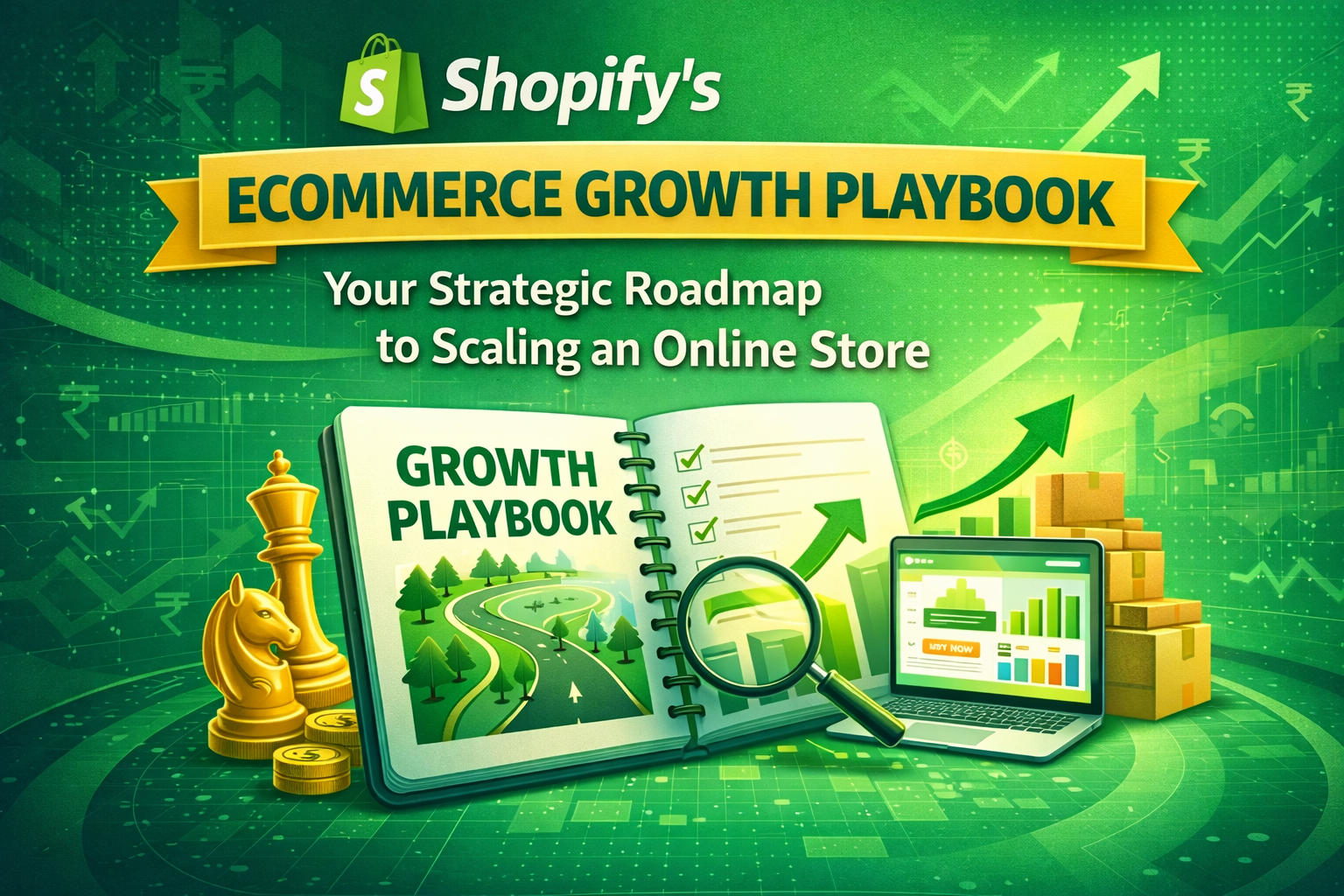
If you’re running an ecommerce business and growth has stalled—or you’re preparing to scale—this playbook isn’t just another marketing blog. It’s a field-tested strategic framework developed from Shopify’s analysis of over a million successful stores. This is the methodology behind the winners.
What is the Ecommerce Growth Playbook?
Shopify’s Ecommerce Growth Playbook is a staged framework designed to help online store owners navigate the complex journey from launch to maturity. It breaks down growth into four distinct phases, each with specific goals, metrics, and actionable strategies. It’s not a collection of random tips—it’s a sequential operating system for sustainable scaling.
Core Philosophy: You Can’t Scale What You Haven’t Validated
The playbook’s biggest strength is its insistence on doing the right work at the right time. Trying to drive viral traffic before you have a proven product-market fit is a fast track to burning cash. This guide prevents that.
The 4-Stage Framework: Where Are You, and What’s Next?
Stage 1: LAUNCH — Find Your First 1,000 Customers
Who it’s for: Brand new stores (0–6 months), or established stores launching a new product line.
Primary Goal: Validate product-market fit and establish a core customer base.
Key Metrics: Initial sales, customer acquisition cost (CAC), repeat purchase rate.
Focus Areas:
- Channel Minimization: Don’t spread yourself thin. Master 1-2 acquisition channels (usually organic social and search engine optimization).
- MVP Product Line: Start with a focused catalog. Depth over breadth.
- Brand Story & Identity: Build a clear, authentic narrative. Why should anyone care?
- System Setup: Install basic analytics (Google Analytics, Shopify Reports), email flows (welcome, post-purchase).
Why follow this stage? It forces discipline. By focusing on a tiny, loyal audience first, you gather the feedback and data needed to build a foundation that can actually support growth. Skipping this leads to a “leaky bucket”—you’ll spend heavily to attract customers who never return.
Stage 2: GROWTH — Build a Predictable Engine
Who it’s for: Stores with consistent sales (50+ orders/month), proven product-market fit, and a desire to scale.
Primary Goal: Lower Customer Acquisition Cost (CAC) and increase Customer Lifetime Value (CLTV).
Key Metrics: CAC, CLTV, Conversion Rate, Returning Customer Rate.
Focus Areas:
- Channel Expansion: Systematically test new channels (Facebook/Instagram Ads, Google Shopping, influencer partnerships). Double down on what works.
- Retention Machinery: Launch loyalty programs, subscription options, and segmented email marketing.
- Conversion Rate Optimization (CRO): A/B test product pages, checkout flow, and site speed.
- Process Automation: Implement tools for inventory, shipping, and basic customer service.
Why follow this stage? This is where you transition from a “project” to a “business.” The playbook provides a checklist to build systems, not just chase sales. Growth without systems is chaos.
Stage 3: SCALE — Expand Your Market & Product Reach
Who it’s for: Established, profitable stores looking to multiply revenue and market share.
Primary Goal: Expand into new markets/customer segments and maximize profitability.
Key Metrics: Profit margin, market share, new market penetration rate.
Focus Areas:
- Market Expansion: Sell internationally (using Shopify Markets), wholesale/B2B, or target new demographics.
- Product Line Expansion: Launch complementary product lines or branded merchandise based on your best-selling items.
- Advanced Retention: Invest in a custom loyalty experience, early-access programs, and community building.
- Team & Tech Scaling: Hire specialists, upgrade to enterprise-grade apps, and leverage advanced analytics.
Why follow this stage? It prevents the plateau. Many stores hit a revenue ceiling because they keep doing the same things. This stage provides the strategic plays to break through that ceiling by leveraging your existing brand equity in new, profitable ways.
Stage 4: MATURE — Optimize & Fortify Your Empire
Who it’s for: Market leaders with significant annual revenue, competing on brand authority.
Primary Goal: Defend market position, maximize operational efficiency, and explore new business models.
Key Metrics: Market share, operational cost percentage, brand affinity scores.
Focus Areas:
- Owned Channel Dominance: Heavy investment in direct traffic (SEO, content) and owned community (app, loyalty program).
- Operational Excellence: Fine-tune supply chain, negotiate with suppliers, and implement predictive inventory.
- Brand as a Moat: Use PR, social impact, and exceptional customer experience to build a brand that competitors can’t easily replicate.
- Innovation & Acquisitions: Explore new revenue models (licensing, SaaS for your expertise) or acquire smaller competitors.
Why follow this stage? It’s about longevity. This playbook shifts focus from acquiring customers to owning a category. It’s the blueprint for building a legacy brand, not just a store.
Critical Cross-Stage Principles (The “How”)
The playbook emphasizes three pillars that apply at every stage:
- Customer Value > Everything: Every decision should increase value for your customer. This builds sustainable growth, not promotional dependency.
- Data-Informed Decisions: Move from “I think” to “I know.” Use Shopify Analytics and other tools to guide every investment.
- Agility & Experimentation: Build a culture of testing. Use small bets to de-risk big moves.
Where to Find & How to Use the Playbook
- Source: Available for free on the Shopify Blog/Resource Center. Search “Shopify Ecommerce Growth Playbook.”
- Format: Typically a long-form article, downloadable PDF, or microsite with interactive checklists.
- How to Use It:
- Diagnose Your Stage: Be brutally honest about where your business stands today.
- Focus on Your Current Stage Only: Ignore the tactics for Stage 4 if you’re in Stage 1. Execute your stage’s checklist completely.
- Benchmark: Use the suggested KPIs to track your progress.
- Review Quarterly: Re-assess your stage. Move to the next phase only when you’ve hit the key milestones.
Final Verdict: Who Should Follow This Guide?
✅ Follow This Playbook If:
- You feel overwhelmed by random advice and need a clear, sequential plan.
- You’re ready to move from “making sales” to “building a business.”
- You believe in sustainable, systems-driven growth over “hacks.”
- You use Shopify (it’s tailored for the platform, but principles are universal).
❌ Look Elsewhere If:
- You want a “get-rich-quick” scheme or a single tactic to 10x sales overnight.
- You’re unwilling to invest time in foundational work like branding and systems.
The Bottom Line:
Shopify’s Ecommerce Growth Playbook is the closest thing the industry has to a standard operating manual. It won’t do the work for you, but it will ensure every hour you invest is pointed in the right direction for long-term, defensible growth. In a world of noise, it provides the signal.
Your next step: Find the playbook, identify your stage, and execute the first item on the checklist. Growth is a process, not an event. Start the process.
FAQs?
To scale a Shopify store in 2025, focus on conversion rate optimization, paid ads, SEO, email marketing, fast checkout, and using the right Shopify apps for automation and growth.
Beginners should start with product-market fit, optimized product pages, basic SEO, social proof, and low-budget paid ads before scaling.
Popular Shopify apps for growth include Klaviyo (email marketing), Judge.me (reviews), ReConvert (upsells), and PageFly (landing pages).
Yes, Shopify is ideal for long-term growth due to its scalability, secure infrastructure, app ecosystem, and support for global selling.
Most stores start seeing measurable results within 60–90 days, depending on traffic quality, product pricing, and marketing strategy.